
Choosing the right material for your swimming pool is one of the most important decisions you’ll make as a pool owner. The type of pool material you select affects everything from durability and maintenance to aesthetics and cost. Whether you’re planning to build a new pool or considering renovations, understanding the pros and cons of each material will help you make an informed choice.
In this guide, we’ll break down the most common pool materials, compare their features, and help you determine which one best suits your needs and lifestyle.
Why Pool Material Matters
The material your pool is made from isn’t just about looks. It also determines:
- How long your pool will last
- The level of maintenance required
- Resistance to damage and staining
- Compatibility with different climates
- Total installation and repair costs
Choosing the right material means fewer long-term issues and a better return on your investment.
Concrete Pools (Gunite or Shotcrete)
Concrete is one of the most popular and customizable pool materials available. These pools are formed by spraying a concrete mixture over a steel-reinforced frame, allowing for any shape, size, or depth.
Advantages:
- Unlimited design flexibility
- Highly durable and long-lasting
- Customizable finishes (tile, plaster, pebble)
Disadvantages:
- Higher upfront cost
- Longer installation time
- Requires regular resurfacing and maintenance
Vinyl Liner Pools
Vinyl pools consist of a metal or polymer frame lined with a custom-made vinyl sheet. They’re a popular choice for budget-conscious homeowners and those seeking a quicker installation process.
Pros:
- Lower initial cost compared to concrete or fiberglass
- Smooth surface that resists algae buildup
- Easier and faster to install
Cons:
- Vinyl liners need replacement every 7–10 years
- Susceptible to punctures from sharp objects
- Fewer design and shape options
Fiberglass Pools
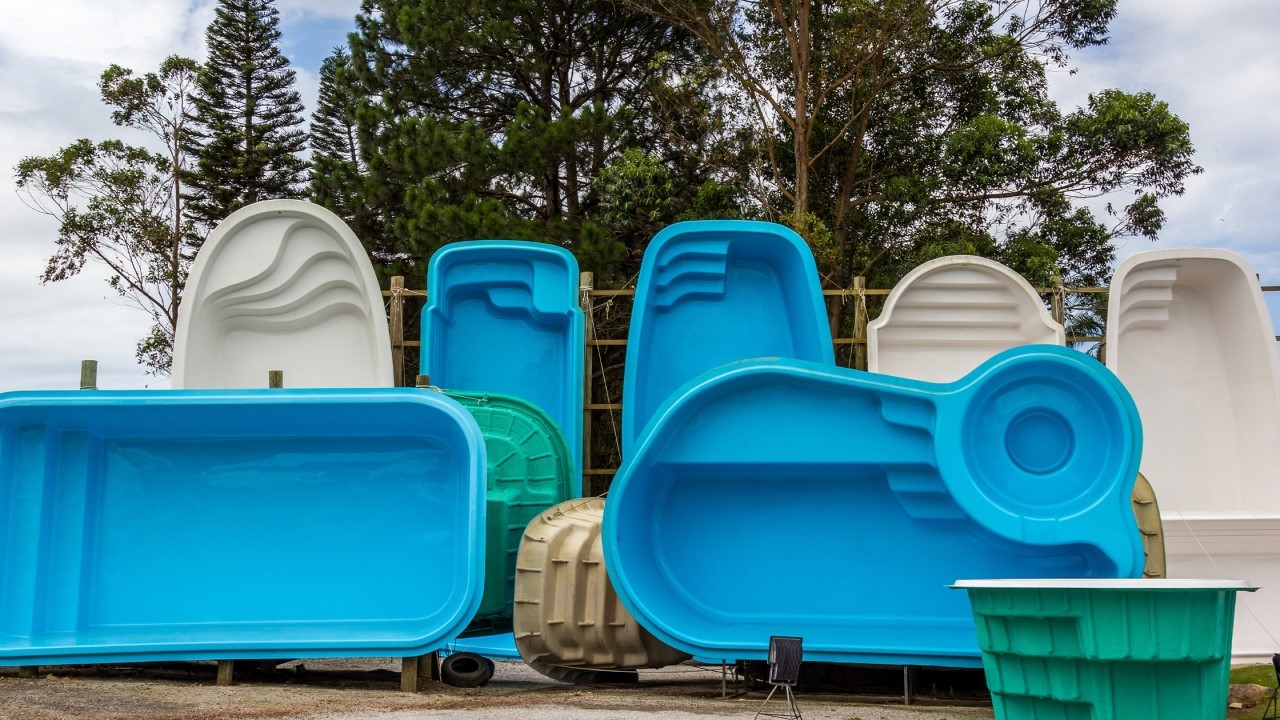
Fiberglass pools are factory-molded into a pre-designed shape and delivered in one piece for installation. They’re known for their low maintenance requirements and quick setup time.
Benefits of Fiberglass Pools:
- Smooth, non-porous surface (resists algae and staining)
- Fastest installation among all materials
- Minimal long-term maintenance
- Compatible with saltwater systems
Drawbacks:
- Limited shapes and size options
- Transportation restrictions due to pre-molded form
- May require backfill adjustments in shifting soil
Fiberglass pools are ideal for homeowners who want a sleek, modern look and minimal upkeep. Combined with a pool cleaner, fiberglass can provide the lowest-maintenance option available.
Alternative and Natural Pool Materials
In addition to traditional options, some homeowners are turning to more unique and eco-conscious pool materials. These include:
- Natural stone pools – Often used for custom luxury builds, natural stone pools integrate with landscaping but require careful waterproofing and maintenance.
- Stainless steel or copper pools – Sleek and durable but much more expensive, these pools are corrosion-resistant and visually striking.
- Natural swimming pools – These pools use plants and biofilters instead of chemicals, requiring special materials like gravel, clay, and regenerative wetlands.
Comparing Pool Materials at a Glance
Here’s a quick overview comparing the core features of concrete, vinyl, and fiberglass pools:
| Feature | Concrete | Vinyl | Fiberglass |
| Installation Time | 2–4 months | 2–4 weeks | 1–2 weeks |
| Cost | High | Low–Moderate | Moderate–High |
| Durability | 25+ years | 7–10 years | 20–30 years |
| Maintenance Level | High | Moderate | Low |
| Customization | Very High | Moderate | Limited |
| Surface Feel | Rough (can vary) | Smooth | Very Smooth |
Choosing the Right Pool Material for You
Deciding which material to choose depends on your specific goals and priorities. Consider the following when making your decision:
- Budget: Vinyl pools are most affordable initially, but may cost more over time due to liner replacements.
- Longevity: Concrete and fiberglass are more durable in the long run.
- Maintenance preferences: If low-maintenance is a priority, fiberglass combined with the best pool cleaner will offer a streamlined experience.
- Aesthetic goals: For creative shapes or luxury finishes, concrete is unmatched.
- Climate: Vinyl and fiberglass may struggle in extreme climates unless properly installed.
Final Thoughts
Each type of pool material offers distinct benefits and challenges. Concrete pools allow total customization and luxury finishes but demand more maintenance. Vinyl liner pools offer affordability and flexibility, while fiberglass pools shine for their speed, durability, and ease of maintenance.
As you evaluate your options, think about the bigger picture — not just how your pool will look on day one, but how it will perform, age, and serve your lifestyle over many years. Pairing your choice with tools like the best pool cleaner will help you extend the life and enjoyment of your investment.
Choosing the right pool material is a foundational step in designing the perfect backyard oasis. Take the time to compare, ask questions, and make the decision that aligns with your goals and vision.