
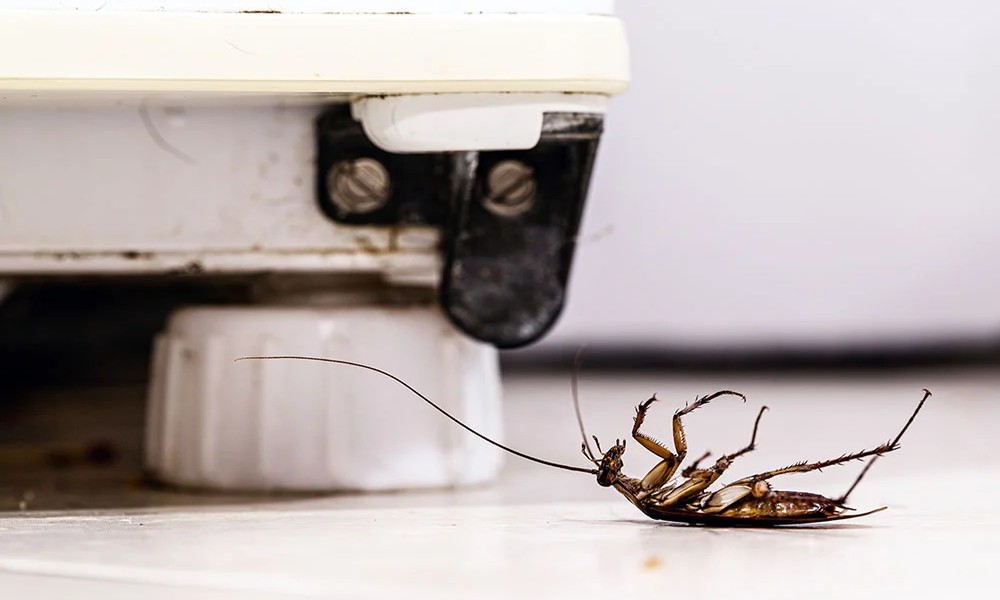
“Integrated pest management” is one of the most widely claimed and least understood terms in the pest control industry. It appears on company websites, in service agreements, and in marketing copy across the Kansas City metro, often without any substantive commitment behind it. The framework itself is specific and well-defined by the EPA, and the gap between what the term actually means and how it is typically used is wide enough that a homeowner evaluating Kansas City pest control companies benefits from understanding it. Companies that genuinely practice IPM, including QualityPro-certified providers such as ZipZap Termite & Pest Control in Lawson, operate in ways that are recognizably different from companies that spray on a schedule and describe the routine as “integrated.”
What IPM Actually Is, Per the EPA
The EPA defines integrated pest management as “an effective and environmentally sensitive approach to pest management that relies on a combination of common-sense practices.” The definition is decades old and has been refined in USDA, university extension, and industry guidance, but the core structure has remained consistent across all of them.
Genuine IPM follows a specific sequence: inspect and monitor to identify the actual pest and assess the scope of the problem; set action thresholds that determine when treatment is warranted rather than treating reactively at the first sighting; prevent infestations through structural exclusion, sanitation, and habitat modification; and apply control measures starting with the least invasive option, moving to targeted chemical application only when less invasive options are insufficient.
Chemical treatment is part of IPM. The distinction from conventional pest control is not that IPM avoids pesticides. It is that IPM treats pesticides as one tool among several and requires justification for their use rather than assuming them as the default intervention.
Why the Term Gets Misused
Most residential pest control in the United States is sold on a recurring service schedule. Companies visit quarterly or monthly and apply residual products to the exterior and interior perimeter whether or not there is a specific pest problem at the moment of service. The schedule-based model is economically rational for both the provider and the customer, and it is not inherently bad, but it is not IPM.
The confusion arises because some companies apply the IPM label to schedule-based service with minimal changes: slightly lower-toxicity products, an exterior-first application sequence, a brief visual inspection before spraying. The framework elements (thresholds, documented monitoring, structural correction, limiting chemical use to justified cases) are often absent.
True IPM is harder to sell because it requires more time per visit, more documentation, more homeowner education, and more structural recommendations that are the landlord’s or the homeowner’s responsibility rather than something the pest control company can fix with a product. It also requires technicians with the training to actually execute the methodology, which is why the credential structure around IPM matters.
How to Tell the Difference in Practice
Several specific indicators distinguish a company practicing genuine IPM from one using the term as marketing.
The first visit is an inspection, not a treatment. Real IPM starts with identifying the pest, mapping entry points and harborage, and assessing conducive conditions. A company that shows up on the first visit with a sprayer and begins perimeter application before diagnosis is not practicing IPM, regardless of what the service agreement says.
Written documentation includes thresholds and monitoring results. IPM programs track pest activity over time with sticky monitors, pheromone traps, or inspection logs. A homeowner asking “what did you find today?” should get a specific answer with data, not a generic “treated the usual areas.”
Recommendations include structural and sanitation fixes. Caulking needed around a utility penetration, a gutter extension redirecting water away from the foundation, a bathroom fan vented to the attic instead of the exterior, storage practices that reduce harborage. These recommendations are often the most valuable part of the visit and cost the company nothing to give, yet schedule-based programs rarely produce them.
Chemical applications are targeted rather than routine. A bait placement in a specific cabinet corner where cockroach activity has been monitored. A crack-and-crevice treatment to a specific expansion joint where ants are entering. An in-ground station placed at a documented termite access point. Not a broad spray of the home’s exterior and interior perimeter on every visit.
Reduced treatment over time indicates the program is working. IPM produces declining pest activity and declining chemical use as structural fixes, exclusion, and sanitation improvements take hold. A program that sprays the same volume of product on every visit for three years straight is probably not actually practicing IPM.
Why QualityPro Certification Matters Here
The QualityPro certification administered by the Foundation for Professional Pest Management (an arm of the National Pest Management Association) requires documented IPM practice as one of its five standards areas. Companies seeking certification must demonstrate written IPM protocols, technician training on the methodology, inspection-driven service structure, and records showing actual application of the framework rather than just claims of it.
Fewer than three percent of U.S. pest control companies hold the credential. Companies that do, including Kansas City pest control providers like ZipZap Termite & Pest Control, have passed independent audits of their IPM documentation and practice. The credential is not a guarantee of a perfect service experience, but it is one of the few ways a homeowner can distinguish companies where IPM is built into the operational structure from those using the term as branding.
When IPM Actually Produces Better Results
IPM outperforms conventional spray-based pest control in several specific categories. Rodent control, where exclusion and sanitation change the long-term outcome more than any amount of bait placement. German cockroach control, where bait rotation and sanitation-focused treatment address the harborage and resource base that spraying cannot reach. Ant control, particularly for colonies nesting outside the structure, where baits carried back to the colony achieve full elimination that surface sprays do not. Structural wood-destroying pests, where the treatment depends more on inspection and targeted intervention than broad application.
For cases where the issue is a one-time event (a single wasp nest under an eave, a yellowjacket colony in a wall void), conventional treatment is often appropriate and IPM is less relevant. The framework matters most for recurring, complex, or resistance-driven problems, which describes the majority of residential pest calls a Kansas City pest control company actually handles.
The Short Version
Integrated pest management is a specific methodology that prioritizes inspection, thresholds, structural correction, and targeted treatment over routine chemical application. It is often claimed and rarely practiced. QualityPro-certified providers, including Kansas City pest control companies such as ZipZap Termite & Pest Control, have documented their adherence to the framework through independent audit, which is one of the clearer ways a homeowner can tell the difference between IPM as practice and IPM as marketing. The distinction shows up in outcomes across any pest category where the real fix involves more than spraying.