
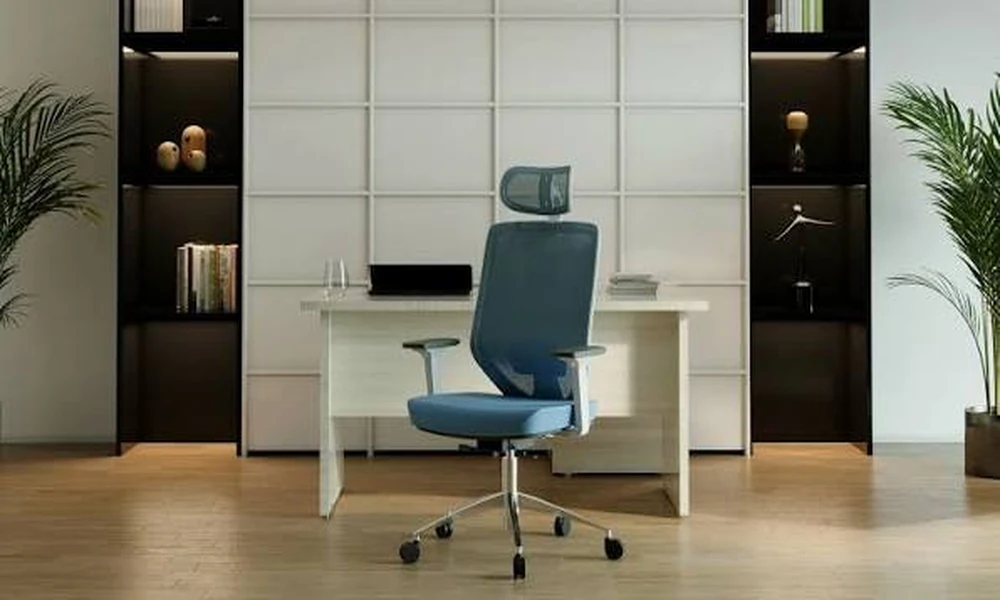
Walk through almost any office in Singapore built or refitted in the past fifteen years and the chairs will be mesh. This is not a styling trend that happened to stick. In a climate where the wet-bulb temperature outside is uncomfortable most of the year and the air conditioning fails occasionally, a seat that lets air through solves a real problem. The rise of the Office Mesh Chair is mostly a story about heat, with some engineering advantages arriving alongside.
Heat Is the Main Argument
A foam-cushioned backrest traps body heat and moisture against the user, and over a full working day that produces the damp shirt everyone recognises. Mesh is a tensioned permeable membrane, so air moves through it continuously and heat dissipates rather than accumulating. The difference is most noticeable after two or three hours of continuous sitting, which is precisely when comfort determines whether someone stays at their desk or starts fidgeting. In tropical conditions this single property outweighs most other considerations.
Support Comes From Tension, Not Padding
A well-engineered mesh back distributes weight across a suspended surface, adapting to the shape of the user’s spine in a way that fixed foam contours cannot. Pressure spreads rather than concentrating at the points where padding compresses. This is why mesh chairs often feel unsupportive for the first ten seconds and then better than expected after ten minutes, and why judging one by pressing it with a hand tells you almost nothing.
Mesh Quality Varies Enormously
The word covers a wide range of products. Good mesh is a woven elastomeric fabric tensioned across a frame, engineered to give differently in different zones and to hold that tension for years. Cheap mesh is a loose polyester net stapled to a plastic frame, which sags within months into a hammock that provides no lumbar support at all. Press the centre of the backrest firmly and release it; quality material returns immediately and holds shape, while poor material stays dished.
The Frame Matters as Much as the Fabric
Because tension is doing the work, the frame carrying it takes considerable load. Look for a frame that resists twisting when you grip the top edge and pull. Check where the mesh attaches, since exposed staples or a simple crimped edge is where failure begins. Some designs use a replaceable mesh panel, which extends the useful life of the chair considerably and is worth asking about even if the answer is usually no.
Full Mesh or Mesh Back With a Foam Seat
Two configurations dominate and they suit different people. A fully meshed chair maximises airflow at both contact surfaces and is the coolest option available, which appeals to anyone who runs warm or works in a poorly cooled space. The hybrid, a mesh backrest over a moulded foam seat, keeps the ventilation where most heat builds up while giving a softer front edge under the thighs. Try both if you can, because the preference is strong and personal.
Where Mesh Is Not the Right Answer
Mesh seats breathe well but can feel hard at the front edge, and users who sit for very long stretches sometimes prefer a foam seat paired with a mesh back, which is now the most common configuration sold. Mesh also traps crumbs and dust in the weave and is more awkward to clean than upholstery. In dusty industrial settings or food-related environments a wipeable surface is more practical. And a genuinely good mesh chair is not cheap; a poor one is worse than a decent fabric chair at the same price.
Adjustments Still Decide Comfort
Material does not substitute for fit. Seat height, seat depth, adjustable lumbar support and armrest height remain the adjustments that determine whether a chair suits a body. Recline tension should be settable to the user’s weight so the backrest follows movement rather than resisting it. Paying for premium mesh on a chair with fixed armrests and no depth adjustment is money spent on the wrong part of the specification. Any mesh office chair worth buying gets the adjustments right first.
Durability and Maintenance
Mesh chairs in daily office use typically show their age in the tension of the back and the condition of the gas cylinder rather than in appearance. Vacuum the weave periodically and check cylinder height retention every few months, since a slowly sinking seat is the earliest sign of a component nearing the end of its life. Ask what warranty applies to the mesh specifically, because it is often shorter than the warranty on the frame and mechanism.
Headrests and Long Days
Mesh chairs are frequently offered with an optional headrest, and whether it helps depends on how you work. For anyone who reclines to read, think or take calls, a headrest supporting the base of the skull relieves the neck meaningfully. For someone typing upright all day it will sit unused behind the shoulders, or worse, push the head forward if it is fixed too low. If you specify one, insist it is adjustable in both height and angle, since a fixed headrest fits roughly one person in three.
Buying for a Whole Office
Order one or two samples and let the people who will sit in them do so for a week before committing to fifty. Involve users of different heights, since a chair that suits an average build may not accommodate the range in your team. Check spare parts availability locally, confirm the lead time, and ask whether assembly and delivery to the floor are included. Specified this way, an Office Mesh Chair programme is one of the few furniture decisions that staff notice for the right reasons.