
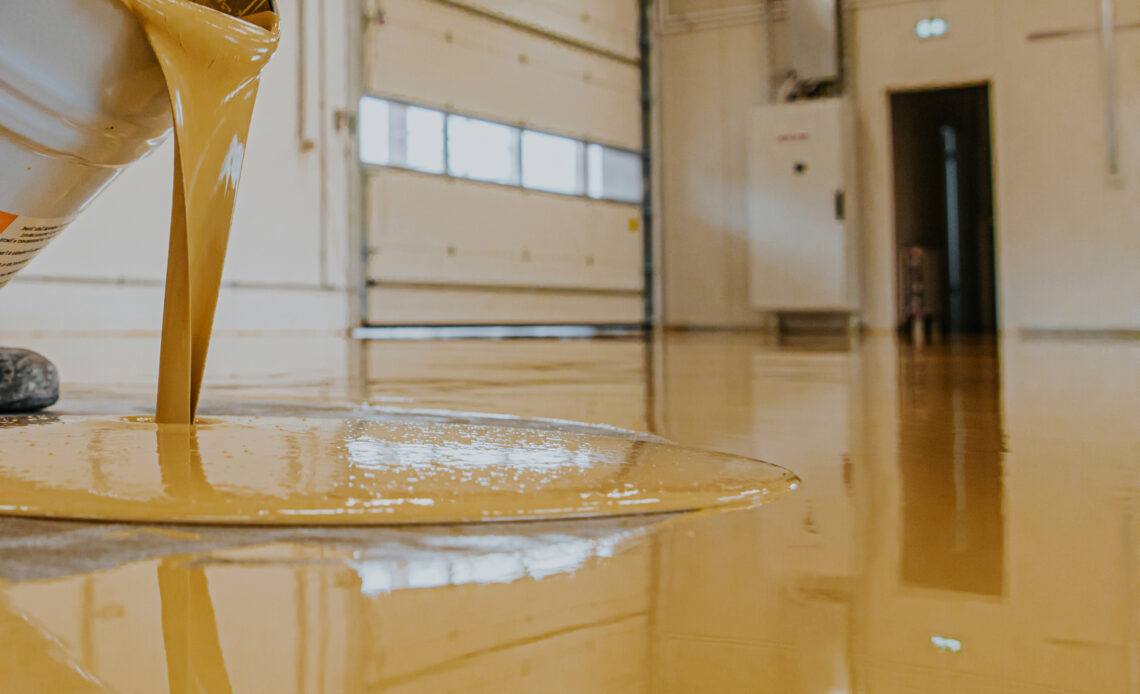
Have you ever wondered what is resin flooring? and what is it used for? Resin flooring is a highly durable, seamless flooring system made from a combination of resins and hardeners that chemically react to form a rigid, long lasting surface. It is widely used in industrial, commercial and increasingly domestic environments due to its strength, hygiene and low maintenance requirements.
If you have seen smooth, glossy floors in warehouses, commercial kitchens, hospitals or modern retail spaces, there is a strong chance they are resin based systems.
How Does Resin Flooring Work?
Resin flooring is typically installed over a prepared concrete subfloor. The liquid resin mixture is poured or rolled onto the surface, where it cures to create a hard, protective layer.
Once cured, the result is:
- Seamless and joint free
- Highly resistant to wear
- Easy to clean
- Waterproof
Slip resistant when required
Because it bonds directly to the substrate, resin flooring becomes part of the structural surface rather than sitting loosely on top like tiles or vinyl.
Types of Resin Flooring
There are several types of resin systems, each suited to different applications.
Epoxy Resin Flooring
Epoxy is one of the most common systems. It provides:
- Excellent durability
- High chemical resistance
- Strong adhesion to concrete
- A smooth, glossy finish
Epoxy floors are commonly used in warehouses, garages and manufacturing facilities.
Polyurethane Resin Flooring
Polyurethane systems are slightly more flexible than epoxy. They offer:
- Better resistance to temperature fluctuations
- Increased impact resistance
- UV stability in some formulations
These are often used in food production areas and commercial environments.
Decorative Resin Systems
Resin can also be used for decorative finishes, including:
- Metallic epoxy effects
- Coloured quartz finishes
- Matt or satin finishes
- Custom colour blends
These systems are popular in retail spaces, offices and high end residential interiors.
Key Benefits of Resin Flooring
Resin flooring offers several advantages over traditional flooring types.
Durability
It withstands heavy machinery, forklift traffic and high footfall without cracking or lifting when properly installed.
Hygiene
Because it is seamless, there are no grout lines or joints where bacteria can accumulate. This makes it ideal for healthcare and food environments.
Low Maintenance
Routine cleaning is simple, requiring only sweeping and mopping in most cases.
Chemical Resistance
Many resin systems resist oils, solvents and cleaning agents, making them suitable for industrial use.
Guidance from the Health and Safety Executive often highlights the importance of slip resistance and safe flooring surfaces in workplaces, which resin systems can be designed to meet.
Where Is Resin Flooring Used?
Resin flooring is widely installed in:
- Warehouses
- Manufacturing facilities
- Commercial kitchens
- Hospitals and laboratories
- Retail units
- Automotive workshops
- Car parks
- Modern residential spaces
Its versatility makes it suitable for environments that demand both performance and visual appeal.
Is Resin Flooring Right for You?
Resin flooring is particularly suitable if you need:
However, proper subfloor preparation and professional installation are critical. A poorly prepared surface can lead to adhesion issues or premature wear.
Final Thoughts
Resin flooring is a robust, versatile and modern flooring solution that combines strength with design flexibility. Whether for industrial durability or commercial aesthetics, it offers a seamless finish that stands up to demanding environments.
When installed correctly, resin flooring provides long lasting performance with minimal maintenance, making it a popular choice across a wide range of sectors.