
Most roof trouble starts small and stays out of sight for a long time. A nail backs out a quarter inch, a pipe boot cracks around its collar, or a membrane seam lets in a few ounces of water every time it rains. You can’t see any of this from the driveway, and you often can’t see it from a ladder. By the time a brown ring spreads across a bedroom ceiling, the water has usually been soaking into insulation and decking for months.
New inspection tools are built to close that gap between when the damage starts and when someone notices it. Drones, high resolution cameras and infrared imaging used to be mostly for big commercial roofs, and now they show up in everyday residential work. They change what a roof inspection can tell a homeowner, and they also have limits worth understanding.
In Chambersburg and the surrounding valley, Done Right Exteriors combines drone flights, AI assisted photo review and infrared thermal scans when it inspects roofs or assesses storm damage. The family business handles roofing, siding, windows and seamless gutters across Franklin, Fulton and Cumberland Counties. It’s a good example of how these tools have become part of normal residential practice.
Reading Warmth Instead of Shingles
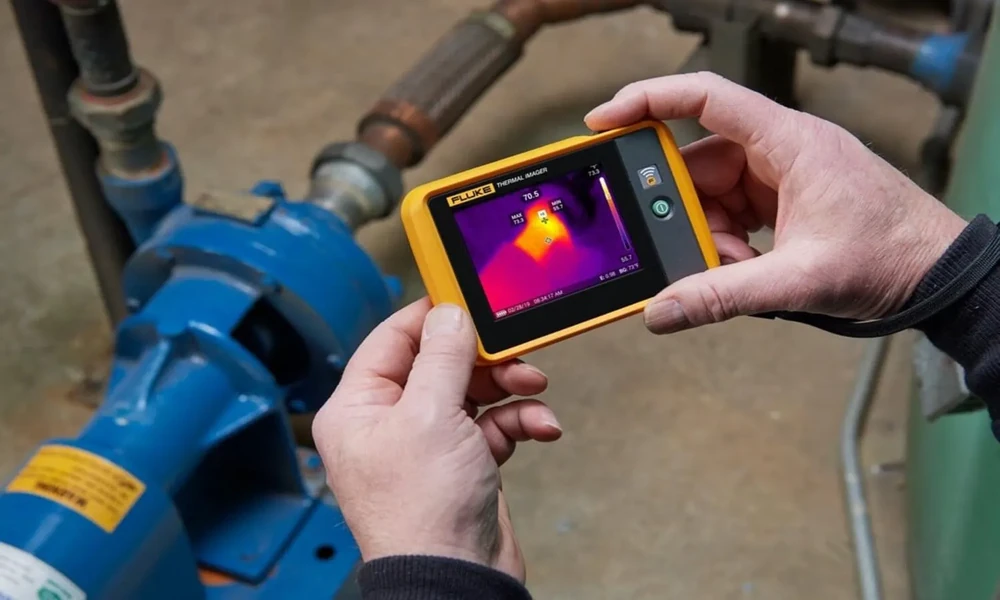
A thermal camera doesn’t see water. It measures the infrared energy coming off a surface and turns small temperature differences into a color map. Water matters here because it holds heat far longer than dry insulation or air. On a sunny day, a roof soaks up warmth. After sunset, the dry areas lose that heat quickly, while patches of saturated insulation stay warm and show up as bright shapes against a cooler background.
Timing and weather decide whether the scan means anything. ASTM International publishes a standard practice for locating wet roof insulation with infrared imaging. It calls for scanning at night and covers the weather conditions, operator qualifications and follow-up testing needed to confirm the results. A reliable night scan usually depends on a few things lining up:
- a sunny day beforehand, so the roof has stored enough heat
- a dry surface with no dew, frost or standing water
- light wind, since a steady breeze cools the whole roof evenly and hides contrast
- a clear sky in the hours after sunset, when the difference between wet and dry spots is strongest
If one of these is missing, a wet area can look perfectly normal, and a harmless spot can look alarming.
Flat Roofs Give Up Their Secrets First
Thermal imaging works best on low slope roofs. EPDM rubber and TPO membranes sit directly on rigid insulation boards, so wet board and roof surface touch, and heat passes straight through. Porch roofs, rear additions, attached garages and dormers on older Pennsylvania homes often use this kind of construction, and they leak more than their size suggests.
The practical benefit is precision. A scan can show that water has spread across forty square feet around a failed seam rather than the whole roof. Often that means the difference between replacing a section of insulation and tearing off everything. A good contractor confirms the bright spots before quoting, usually with a moisture meter or a small core cut, because a warm patch can also come from a past repair, an extra layer of material or trapped heat near a vent.
Pitched Roofs Call for a Different Playbook
Shingle roofs over a ventilated attic don’t behave the same way. Air moving under the decking breaks the thermal link that makes flat roofs so readable, so an outdoor night scan of asphalt shingles rarely tells the whole story. On these homes, the infrared camera is more useful inside the attic on a cold day. There it can show warm air escaping around bath fans, recessed lights, chimney chases and uninsulated top plates. That leaking heat is what melts snow higher on the roof and feeds the ice dams that form along South Central Pennsylvania eaves almost every winter.
On these roofs, the drone’s regular camera does most of the work. Close overhead photos can show hail bruises, shingle tabs creased by wind, granule loss collecting in valleys, nail heads lifting through the mat, and gaps in flashing at chimneys and sidewalls. Software can scan hundreds of images and flag patterns a tired eye might miss, such as clusters of impact marks on one slope. Still, a trained person should look at every flagged photo, because software can’t tell a hail bruise from a smear of tree sap.
Siding and Windows Carry Clues Too
The same camera pointed at exterior walls on a winter evening reveals a lot. Blown cellulose that has settled leaves a cold band at the top of a wall cavity. Air leaking around an old window frame shows up as a warm streak on the cold siding next to it. A rim joist that was never insulated stands out as a bright stripe at the top of the foundation.
Thermal patterns can also hint at moisture behind siding. A cool, damp area below a window corner often means the flashing under the sill has failed and water is wicking into the sheathing. That kind of finding is worth knowing about before you choose new windows, since replacing the units won’t fix wet framing underneath.
The Fine Print on Flying Cameras
Any drone flown for paid work in the United States has to be operated by someone holding an FAA remote pilot certificate under Part 107. Asking whether your inspector holds one is a fair question, and a professional will expect it.
Drones also make inspections safer and gentler. No one has to walk a steep slope or a brittle, hail damaged surface, and foot traffic can’t scuff loose granules that were still holding on. A drone does have blind spots, though. It can’t feel a soft spot in rotted decking or lift a shingle to check the nailing pattern. Tall trees and gusty days also limit how close it can fly. Reflective metal flashing can confuse a thermal reading as well, because shiny surfaces mirror the temperature of the sky instead of showing their own. The best inspections combine aerial images with some hands-on checking wherever the photos raise a question.
Getting a Report You Can Actually Use
The point of all this equipment is a clear record, not a pile of colorful images. A useful report pairs each thermal image with a regular photo of the same spot, so you can see exactly where the anomaly is. It notes when the scan was done and what the weather was, explains how each suspicious area was confirmed, and includes measurements that hold up when you compare quotes.
Dated, location-tagged images are also helpful when a summer hailstorm or a strong winter wind leads to an insurance claim. Adjusters respond much better to before and after evidence than to a description of what used to be there. That’s why many homeowners now get a baseline scan when a roof is still in good shape, then compare it after the next major storm. A baseline is much easier to compare against than the memory of a roof that nobody ever looked at closely.