
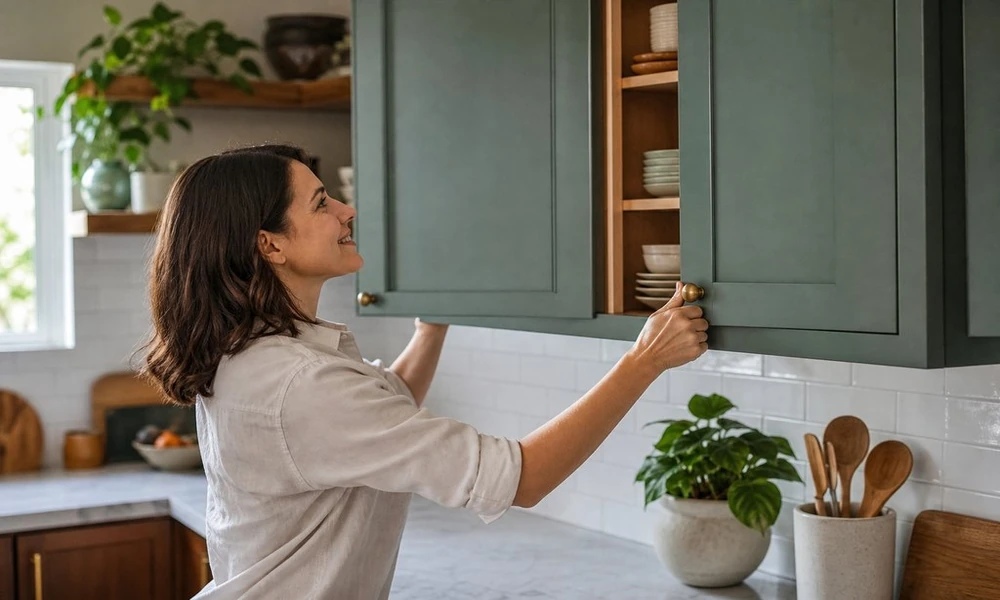
Custom kitchen cabinetry
Custom kitchen cabinets aren’t just storage for plates and canned goods, they dictate flow, where appliances live, how much counter space is available, and whether you’ll actually clean up after dinner. It’s important to think about custom cabinets well before we get to finishes and door styles.
The best custom kitchen design is one that meets your actual storage needs. If you love to cook, then you might want deep drawers near the stove. Or maybe you just want a beverage station and easy pantry access.
Analyze How Your Kitchen Functions
Before you choose a finish or style for your custom cabinets, examine how your kitchen is used on a day-to-day basis. What’s the typical pattern of usage? Who spends the most time in your kitchen? What items are used most frequently? Where do you find yourself dropping things that need to be put away?
Here are some things to take stock of:
- Pots, pans, and baking sheets
- Small appliances that take up counter space
- Food storage containers, spices, and pantry items
- Cleaning products
- Pet food, recycling
Keeping track of these items helps you avoid creating beautiful cabinetry that doesn’t serve your family’s daily needs. You might find that a walk-in pantry, as mentioned here, sounds like a great idea on paper, but if your most commonly used foods are too high or too low to be easily reached, then it’s not very useful.
Make Cabinet Design Support the Layout
Base cabinets, upper cabinets, tall cabinets, and islands should work with your layout, not against it; the practical side of cabinet maker Davie starts there. When designing the cabinetry, you have to consider the placement of appliances, traffic patterns, and other built-in elements.
Before selecting your custom kitchen cabinetry, a designer will measure walking space. Kitchen Remodeler Davie is a kitchen remodeling company based in Davie, Florida. The primary walking space should generally be at least 36″ wide, though work aisles might need to be wider depending on how your appliances open and how many people are using the kitchen simultaneously. It depends on your layout and local building codes, but not leaving enough clearance for traffic will result in a cramped-feeling kitchen no matter how nice your custom cabinets are.
Door swings should also be taken into account. Your fridge, dishwasher, oven, and cabinet doors shouldn’t interfere with each other when they’re all open at the same time. Drawers might be better suited to tight spaces than doors, as they pull items out towards you rather than making you reach into a dark cabinet.
Use Small Details to Improve Cabinet Storage
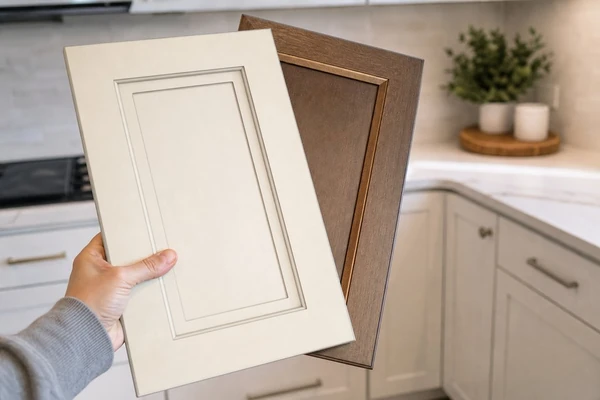
Kitchen cabinet storage
Custom cabinetry differs from standard cabinets primarily in its finer details. Some interior storage accessories are unnecessary, while others will transform your kitchen experience.
Deep Drawers for Heavy Items
Deep drawers are great for pots, pans, and stacks of dishes. Hardware that extends all the way out allows you to reach all the way back. For heavy duty use, you don’t want fancy exteriors; just solid construction and drawer slides that can handle the weight.
A Space for Oddball Items
Things like baking sheets, cutting boards, garbage cans, and small appliances often don’t fit well into standard shelving units. You can keep them handy by installing a tall thin slot, a sliding tray, or a garage for your toaster. Just try not to fill up the main workspace with things that get used once in a while.
Don’t Let Corners Go to Waste
If you have a blind corner cabinet and no way to pull anything out of it, you’re wasting valuable space. There are many ways to take advantage of corners. Pullout shelves, angled cabinets, or even custom shelving units could be an option. However, if you want to save money, it’s probably best to leave one area as a dead zone that only gets used occasionally for a few dishes that don’t need to be readily available.
Choose Materials for Daily Wear
Whether it’s a cabinet box, a door, a drawer front (keep https://britannica.com/technology open if you’re going to need the details), or paint color, you’ll want to choose your materials based on how much abuse they’re going to take. While paint offers more color options, it might show scuffs and scratches. Stained wood shows off grain patterns better but can be hard to match if something breaks. Laminates and similar materials tend to be more durable and easier to maintain.
Think about where water will pool, and try to avoid placing wood near the sink or next to a dishwasher or refrigerator. If water ends up sitting there, it can cause swelling and rot. Ask yourself what happens if a door is damaged down the road: Can the finish be repaired? Is there a spare part that can replace one piece rather than the whole set?
Verify Every Measurement Before Ordering
Accurate measurements are critical to ensuring that everything fits. Walls may not be perfectly plumb, floors can be uneven, and existing openings may have irregularities. Check appliance dimensions, including handles, clearances, and vents. If you buy the wrong size, it can look bad or not work at all.
Confirm the Installation Plan Before You Order
Make sure that you’ve decided on which cabinets you want, what sizes you need, and how the installation will go before starting the project. Keep a list of your appliances, hardware, and any extra materials you plan to reuse later on.
Walk through your design with a tape measure and mark where your cabinets will go. Make sure that you’ve got enough room to open up the dishwasher and that the space between counters and islands is wide enough to move around easily.