
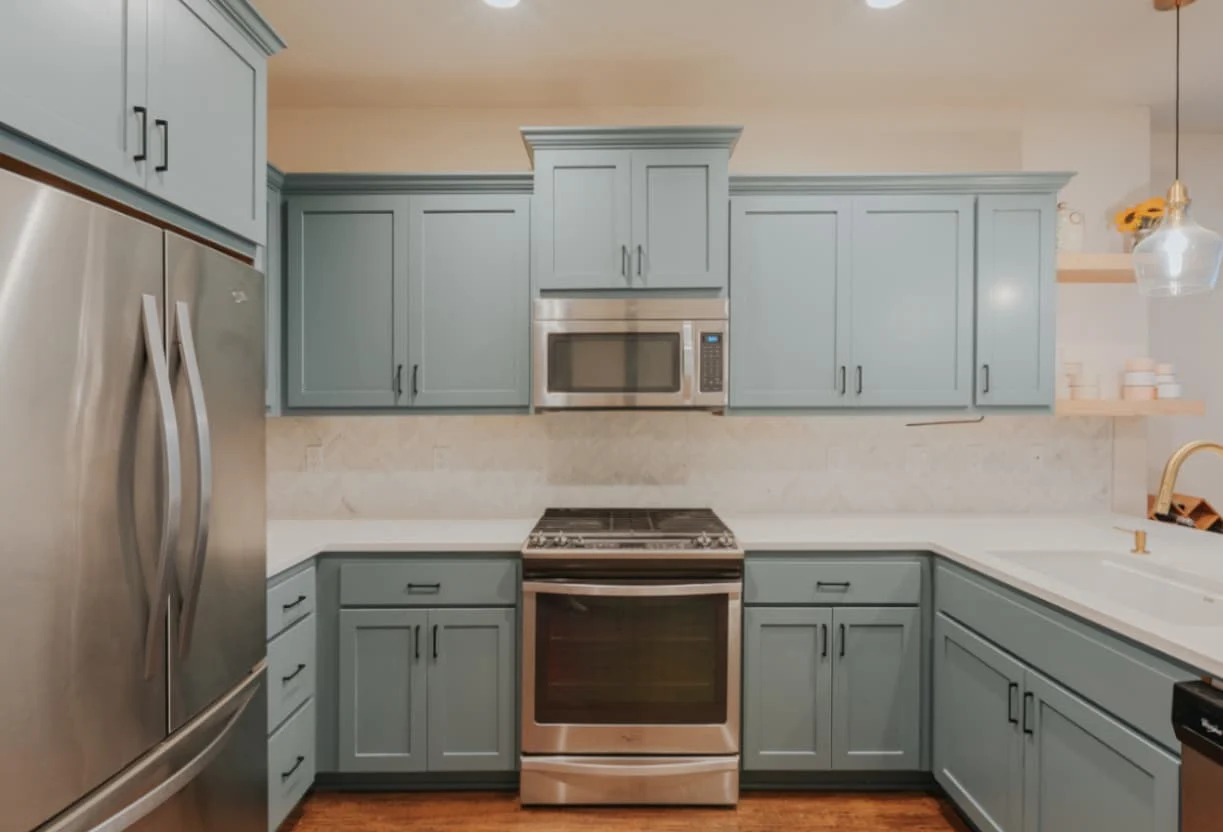
Choosing between laminate vs wood cabinets is one of the biggest decisions in a kitchen remodel. In 2025, homeowners are weighing not only upfront price and durability, but also style, sustainability, and resale value. Each material brings real trade-offs: laminates excel at consistent finishes and budget control, while wood delivers natural warmth and the option to refinish. This guide breaks down the practical differences, cost, daily wear, looks, eco-factors, maintenance, and market appeal, so they can invest with confidence. If they need a deeper dive on finishes and hardware, they can always Read more from trusted design sources as they refine their plans.
Cost comparisons between laminate and wood cabinetry in 2025
Sticker price still separates these two in 2025, but the gap narrows once labor, customization, and lifecycle are considered.
Typical installed ranges (will vary by region, design complexity, and cabinet line):
- Laminate (TFL/thermofoil or HPL): often the more affordable path for stock and semi‑custom lines. Expect many projects to fall roughly in the lower-to-mid tiers compared to wood. High-pressure laminate (HPL) and premium edge-banding can push costs higher, especially with custom sizes.
- Solid wood/veneered wood: generally higher at the door/drawer front level, with costs driven by species (maple, oak, walnut) and finish. Custom profiles, inset construction, and specialty finishes increase budgets quickly.
Key drivers that move the number up or down:
- Door style and construction: Slab laminate doors are efficient: five-piece shaker doors in real wood cost more.
- Finish complexity: Simple matte laminate is budget-friendly: hand-applied stains, paints, and glazes on wood add labor.
- Box materials: Plywood boxes cost more than particleboard/MDF, regardless of face material.
- Customization: Non-standard sizes, organizers, and appliance panels impact both materials similarly.
- Installation and accessories: Soft-close hardware, pull-outs, and lighting add to any cabinet package.
Lifecycle value matters. Wood can be refinished or repainted down the road, extending service life without a full replacement. Laminate resists stains and won’t need re-sealing, but deep chips or delamination often require door replacement rather than repair. Over a 15–20 year horizon, a slightly higher upfront wood cost can even out if design trends change and a refresh is desired, while laminate’s advantage is strong cost control on day one and predictable maintenance costs.
Bottom line: for strict budget targets, laminate typically wins. For long-term flexibility and premium finishes, wood earns its price, especially in semi-custom and custom categories.
Durability challenges for both materials in daily use
Both materials handle a busy kitchen, but they fail differently, and that’s what matters.
Laminate strengths and watch-outs:
- Strengths: Excellent resistance to stains and many household cleaners: color consistency across doors: stable in humidity swings because the decorative layer isn’t expanding and contracting like solid wood.
- Challenges: Heat is the enemy. Prolonged exposure from countertop appliances or proximity to ovens can cause peeling or blistering, particularly with thermofoil. Edges are vulnerable to chipping if edge-banding is thin or poorly applied. Deep damage is hard to “patch invisible.”
Wood strengths and watch-outs:
- Strengths: Dense hardwood faces handle knocks well, and surface scratches can often be touched up. Quality finishes protect against splashes. Wood feels solid and ages gracefully when cared for.
- Challenges: It moves with humidity. Without climate control (ideally ~35–55% RH), doors can warp or joints open slightly. Standing water can discolor finishes. Softer species dent more easily. UV light can mellow, or fade, certain stains over time.
What improves durability for both:
- Specify plywood boxes for better screw-holding and moisture resistance.
- Choose thick, well-applied edge-banding on laminate: avoid heat sources too close to doors.
- Opt for factory-cured finishes on wood (conversion varnish or high-grade waterborne systems) for tougher topcoats.
- Use soft-close hardware to minimize slams, and a good hood to reduce moisture and grease.
In everyday family use, kids, pets, constant cooking, laminate shines for wipeability and consistency, while wood rewards owners who maintain stable humidity and are comfortable with an occasional touch-up.
Aesthetic differences that influence homeowner decisions
Design-wise, Laminate vs Wood Cabinets diverge in feel as much as in look.
Wood’s appeal:
- Natural variation: Grain, cathedrals, and figure create one-of-a-kind doors. Even in painted finishes, subtle telegraphing of grain can add depth.
- Finish versatility: Wood can be stained, painted, or glazed, and later refinished. That’s huge if tastes evolve.
- Tactile warmth: The way light plays across natural grain is hard to fake, and it suits traditional, transitional, and many contemporary kitchens.
Laminate’s appeal:
- Consistency and color range: From crisp whites to moody hues, concrete looks, and incredibly realistic “synchronized” wood textures, laminate can hit almost any palette, including ultra-matte and high-gloss.
- Modern lines: Perfectly flat slab doors with invisible or minimal seams deliver a sleek, European vibe. Finger-pull and channel details pair especially well.
- Colorfastness: Quality laminates hold color uniformly across batches, minimizing door-to-door variation.
Design constraints to note:
- Edge and profile options: Laminate doors typically favor slab or simple profiles since wrapping complex edges cleanly is harder. Wood supports a wider array of routed profiles and inset construction.
- Seams and light: Under raking light, edge-banding lines can be visible on laminate: wood joinery reads more “authentic,” especially up close.
A smart approach in 2025 is mixing: laminate perimeter cabinets in a durable matte finish with a wood island in a contrasting stain. The contrast adds warmth without blowing the budget, and it photographs beautifully for listings later.
Sustainability and eco-friendly considerations in cabinet design
Sustainability isn’t just a buzzword: it drives real product choices.
Wood cabinetry:
- Responsible sourcing: Look for FSC-certified wood to support sustainable forestry. Domestic species reduce transport emissions.
- Low-emission cores: Plywood/MDF should comply with TSCA Title VI (US) for formaldehyde emissions: many lines exceed this with ultra-low-VOC options.
- Circularity: Wood doors can be refinished, keeping cabinets in service longer and reducing landfill.
Laminate cabinetry:
- Material makeup: HPL and TFL use paper layers and resins. Some manufacturers offer recycled content papers and publish Environmental Product Declarations (EPDs) and Health Product Declarations (HPDs).
- Longevity as sustainability: Durable, easy-to-clean surfaces mean fewer harsh chemicals and delayed replacement.
Shared best practices:
- Finishes and adhesives: Prioritize low- or no-VOC finishes and CARB/TSCA-compliant cores.
- Local sourcing and efficient layouts: Shorter supply chains and right-sized orders lower embodied carbon.
- Refacing instead of replacing: Swapping doors and fronts (laminate or wood) while keeping boxes can slash waste.
End-of-life matters too. Solid wood and plywood are easier to recycle or repurpose than resin-impregnated laminates, but choosing quality hardware and timeless colors often keeps any cabinet set out of the waste stream for decades. Those long-lived choices are the greenest ones. For shoppers who want to read more on certifications, focus on FSC, EPD/HPD documentation, and TSCA Title VI compliance statements.
Long-term maintenance requirements of laminate vs wood
The good news: both options are low effort day-to-day. The differences show up in repairs and refreshes.
Laminate care:
- Cleaning: Mild soap and water, microfiber cloth. Avoid abrasives and strong solvents.
- Heat and edges: Use heat shields near ovens and keep toasters/air fryers a few inches forward. Protect edges from repeated impacts.
- Repairs: Minor scuffs can be blended with color-fill sticks. Deep chips, swelling, or delamination typically mean door replacement rather than sanding/painting.
Wood care:
- Cleaning: Similar routine, mild soap, wipe dry, no soaking. Immediately wipe spills around sinks and dishwashers.
- Touch-ups: Scratches and small dents can be filled and color-matched. Painted wood can be spot-repaired more convincingly than laminate.
- Refresh cycle: After years of wear, doors can be professionally sanded and refinished or repainted for a fresh look without replacing boxes.
Universal tips: maintain stable indoor humidity, adjust hinges annually to keep reveals even, and choose high-quality hardware to prevent sagging. Over 10–15 years, owners who want the option to change color or sheen will appreciate wood’s refinishability: those who prefer “set it and forget it” will like laminate’s wipe-clean resilience.