
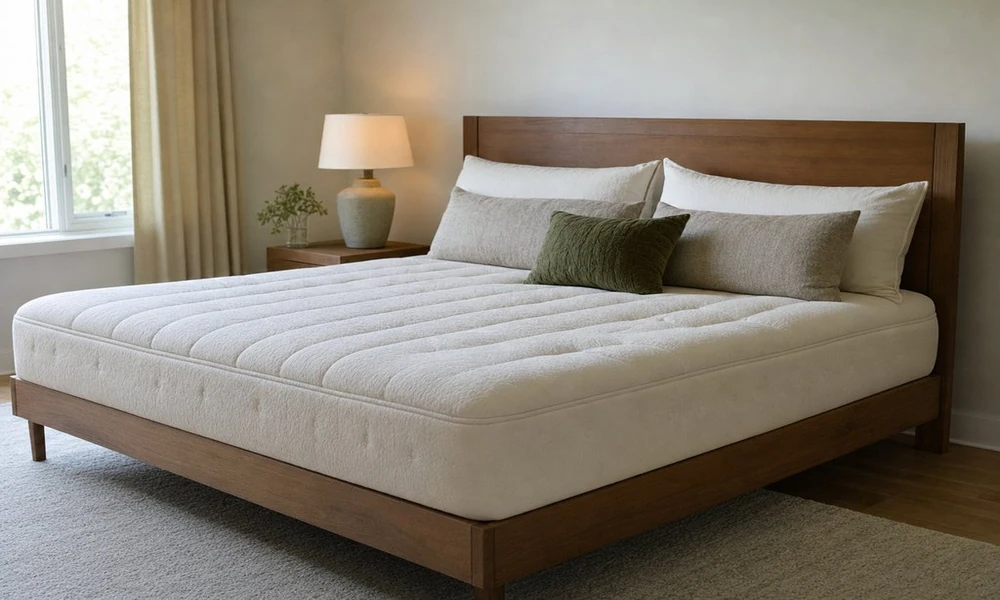
There’s something undeniably appealing about king-size mattresses since they’re roomy, accommodating, and have a certain luxurious feel. But when shopping for a king mattress, it’s important to know more than just the different types of mattresses and their pros and cons.
Measure the Room Before Choosing the Bed
For starters, king mattresses measure 76 inches wide, so they’ll take up more space in your bedroom than smaller mattresses do. That means you’ll have less floor space to maneuver around your bed frame, headboard, nightstands, and other bedroom furniture.
Before shopping for a king mattress, measure your bedroom and visualize how you’ll be able to navigate around your new mattress. Can you still get to your closet door and walk freely around your bed? Will it be easy to make your bed, or will you have to tiptoe around your king mattress every morning?
Think about whether a king-size mattress would work in the room where you plan to use it, since king size mattresses are best suited to rooms with clear walking space and may be impractical if the extra width blocks everyday movement. If it’s for a guest room that’s used a few times a year, for example, you might want to keep as much floor space as possible so the room feels open and flexible.
Match Support to Sleeping Position
Everyone has different needs when it comes to mattress support and pressure relief. Before shopping for a king mattress, consider what position you sleep in most and what kind of support you need to feel comfortable and wake up feeling rested.
- Side sleepers need enough cushioning in the shoulders and hips to relieve pressure.
- Back sleepers need a supportive and level surface that cradles the lumbar region and keeps the hips from sinking too deeply into the mattress.
- Stomach sleepers often prefer firmer mattresses that won’t allow the midsection to sink in.
- Combination sleepers can often benefit from a responsive mattress that allows for easy position changes.
If you and your partner have different preferences, look for a king mattress that balances plushness with supportive firmness so neither of you feels like you’re compromising on support and comfort.
Choose a Workable Firmness Level
There’s no single right answer to choosing a mattress firmness level, as explained at https://www.consumerreports.org/home-garden/mattresses/buying-guide/. The best mattress firmness level for you depends on your personal preference, weight, and sleeping position.
If you’re shopping with your partner, try to find a middle ground, a firmness level that’s plush enough to relieve pressure in the hips and shoulders for side sleepers, but firm enough to keep the spine and hips aligned for back and stomach sleepers.
Compare Mattress Construction
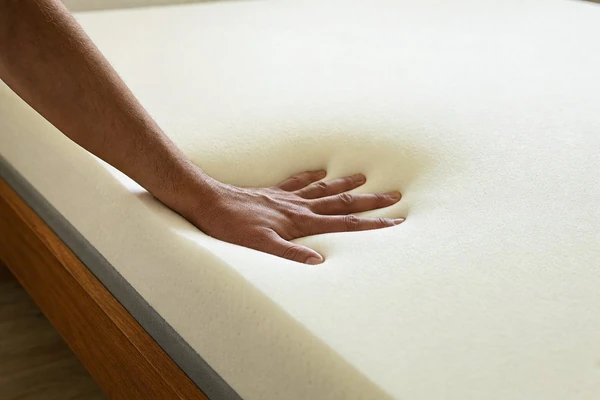
Different mattress constructions have different feels:
- Memory foam: Memory foam is known for its body-contouring, sink-in feel. It also tends to isolate motion well, so if you share your king mattress with a partner, you may not feel them tossing and turning throughout the night. Some people, however, don’t like the feeling of sinking into memory foam or find it difficult to move around on.
- Innerspring: Innerspring mattresses are bouncier and have a more traditional mattress feel. Some people prefer the way innerspring mattresses feel compared to the sink-in feel of foam, and many innerspring mattresses have stronger edge support than all-foam models.
- Hybrid: Hybrid mattresses combine the body-contouring comfort of foam with the bounce and responsiveness of coils.
- Latex: Latex is buoyant and responsive, and many people like the feel of latex mattresses because it’s easy to move around on them.
Test the Mattress and Confirm the Fit
If possible, test out a mattress before you buy it. Lay down on the mattress in the showroom in the clothes you’d typically sleep in and in your preferred sleeping position. Relax and take your time getting a feel for the mattress. Do your shoulders feel like they’re being crushed? Does your lower back feel unsupported? Are your hips sinking deeper into the mattress than the rest of your body? If you’re shopping with your partner, have one of you move around on the mattress while the other notes how much motion he or she feels.
If you’re shopping online, make sure the company offers a risk-free sleep trial so you can test out the mattress in the comfort of your own home. Keep in mind that it can take a few nights for a foam mattress to fully expand after unboxing, and it can take some time to adjust to a new level of firmness and support.
Also note:
- Any special delivery options
- If the mattress needs to be put together
- The company’s return policy in case you end up not liking the mattress after the trial period ends
Before making your final decision, measure the width of your doorways and hallways to make sure the mattress will fit through them, and double-check the dimensions of your king bed frame. Jot down any concerns you and your partner have about mattress firmness and support so you don’t forget them while you’re mattress shopping.