
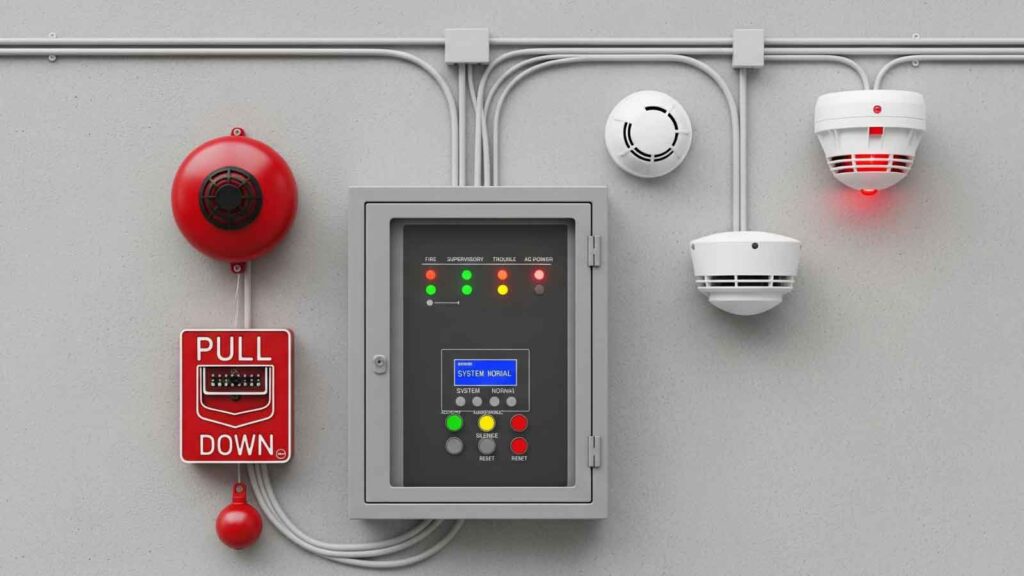
Commercial theft has changed. Fast.
Burglars are not doing it just to anyone. New teams are attacked with the same planning that has been applied to warehouses, retail stockrooms, server rooms, and distribution facilities. When staffing is inadequate, when valuable inventory is located, and when buildings are still using outdated sirens without a verification layer.
That’s the reason why more property managers and business owners are investing in upgrading their security systems. When considering your options, it may be wise to visit websites and resources offered by companies that offer commercial monitoring solutions, not just basic residential solutions repurposed for business use.
A contemporary commercial alarm system is not designed solely to sound an alert after a break-in. Its purpose is to detect threats early, verify the authenticity of the event, and trigger the appropriate response before losses become significant—see website for professional alarm company solutions.
The 3 Pillars of Commercial Security
1. Detection
The key component of a commercial alarm system is the detection. If the sensors are not able to detect suspicious activity in a timely fashion, the rest of the security chain fails.
Today’s systems are more sophisticated and are not based solely on motion detection. That includes:
- Dual-technology motion sensors
- Glass-break analytics
- Perimeter defense beams
- Door position monitoring
- Smart access control logs
The goal isn’t sensitivity alone. It’s accurate.
False alarms waste police resources and create dangerous complacency among staff. That’s why newer systems focus heavily on false alarm reduction through AI-assisted filtering and environmental analysis.
A warehouse should respond differently to forklift movement during operating hours than it does to motion near a loading dock at 2 a.m.
2. Verification
Verification separates serious commercial systems from standard audible alarms.
With verified video technology, the monitoring center receives visual confirmation the moment a sensor trips. Operators can immediately determine whether the threat is legitimate or environmental.
That matters because law enforcement treats verified alarms differently.
A standard siren may get delayed response treatment due to high false alarm rates. A verified intrusion event with live video evidence typically receives elevated dispatch priority.
Video verification also creates a timestamped incident trail that supports:
- Insurance claims
- Internal investigations
- Employee safety reviews
- Evidence retention
For multi-site businesses, remote verification reduces the need for managers to physically inspect properties after hours.
3. Response
Detection without response is just documentation.
Strong systems integrate 24/7 professional monitoring, automated escalation procedures, and redundant communication pathways to ensure signals reach operators without interruption.
That’s where cellular backup becomes essential.
The system can also send alerts via a secondary cellular channel, in case of Internet service down or if an intruder deliberately blocks communication lines. Even the most sophisticated equipment can be vulnerable without backup communication.
Fast response coordination often determines whether theft becomes attempted theft or confirmed loss.
Why Businesses with Alarm Systems Are Less Likely to Be Targeted
Criminals prefer low-resistance environments.
Security industry data consistently shows that businesses with visible monitored alarm systems are significantly less likely to experience burglary attempts. Some studies estimate that protected commercial properties are 4.5 times less likely to be burglarized than unsecured locations.
The deterrence factor matters, but visibility alone isn’t enough anymore.
Organized theft groups often test response times before attempting entry. If they identify delayed monitoring or poor perimeter coverage, the property becomes more attractive.
That’s why layered protection has become standard practice for commercial facilities.
Standard Audible Alarms vs. Advanced Verified Systems
| Feature | Standard Audible Alarms | Advanced Verified Systems |
| Intrusion Detection | Basic motion sensing | Adaptive intrusion detection |
| Monitoring | Local siren only | 24/7 professional monitoring |
| Video Capability | Passive recording | Verified video technology |
| Response Priority | Lower police priority | Verified dispatch escalation |
| Communication | Single internet connection | Cellular backup + network redundancy |
| False Alarm Control | Limited | AI-assisted false alarm reduction |
| Remote Access | Minimal | Cloud-based mobile management |
| Perimeter Coverage | Interior-focused | Full perimeter defense integration |
Strategic Vulnerabilities Businesses Often Overlook
Most break-ins don’t happen through the front entrance.
Experienced intruders look for weak access points that receive less surveillance coverage or limited after-hours visibility.
Common vulnerabilities include:
- Roof hatches
- Loading dock doors
- Rear service entrances
- Outdoor utility access panels
- Detached storage areas
- HVAC access points
- Employee-only side entries
- Poorly lit parking zones
A strong commercial alarm design accounts for every access layer, not just customer-facing entrances.
When considering upgrades, business owners should also review website information on system zoning, particularly those owners with warehouses, manufacturing areas, or multi-tenant properties.
A new direction in commercial security trends
Commercial alarm systems are also making their way to be smarter and more connected.
Three developments are driving most security upgrades right now:
AI-Assisted Threat Filtering
Modern platforms analyze movement patterns, object behavior, and environmental conditions to improve detection accuracy.
Mobile Access Credentials
Physical keys are steadily being replaced with encrypted mobile credentials tied to employee permissions and audit logs.
Cyber-Hardened Alarm Infrastructure
Security hardware now requires network protection just like other business systems. Manufacturers are strengthening firmware security to prevent unauthorized remote access.
FAQ
How does video verification work?
Once a sensor is triggered, the alarm system will automatically transfer live or recorded video to a security monitoring center. Operators verify if any crime is taking place before sending the police.
Do commercial alarms deter theft?
Yes. Visible alarm systems and monitoring, surveillance, and perimeter security measures are a big deterrent to burglary and can increase response time during an active burglary incident.
What are the reasons why cellular backup is important?
In the event of a loss of internet/landline communications, cellular backup enables alarm signals to be carried to the monitoring centre continuously.
Final Thoughts
Commercial theft continues, and old-style alarm systems have too many gaps.
You can see website for businesses today is a security infrastructure that can identify threats at an early stage, validate incidents in real time, and allow continuous communication in case of emergencies. It involves integrating perimeter security, verified video systems, adaptive intrusion detection, and on-demand, around-the-clock professional monitoring into a single system.
The businesses hardest to target are usually the ones that make criminals uncertain they’ll get in — or get out.