
When you think about retaining walls, what’s the first image that comes to mind? For most homeowners, it’s a solid structure that keeps soil in place and creates usable, level spaces in a sloped yard. But here’s the truth—retaining walls are much more than just stacked blocks or poured concrete. Their strength and effectiveness depend on three critical factors: soil, slope, and drainage. Ignore these, and even the sturdiest wall may fail over time.
Let’s discuss why these elements matter so much and how they influence the design of a long-lasting retaining wall.
Why Retaining Wall Design Requires More Than Aesthetic Choices
Many people approach retaining walls as purely functional or decorative additions to landscaping. While it’s true that they provide visual structure and prevent erosion, a wall isn’t simply about looks. Beneath the surface, engineering principles dictate how well it will stand the test of time.
Ask yourself this: what good is a beautifully finished wall if heavy rains or shifting soil cause it to crack, lean, or collapse? This is why understanding the relationship between soil, slope, and drainage is key to building a wall that works as intended.
The Role of Soil in Retaining Wall Design
Soil is the foundation of every retaining wall project. Its type, composition, and behavior under pressure will directly impact how the wall performs.
1. Soil Types and Their Impact
Different soils behave differently under pressure and water exposure. For example:
- Clay soil holds water and expands, creating intense lateral pressure against the wall.
- Sandy soil drains quickly but can shift easily if not compacted properly.
- Loam offers a balanced mix of drainage and stability, making it one of the best soils to work with.
Have you ever noticed how some yards turn muddy puddles after rain, while others drain water quickly? That’s soil at work—and it plays a major role in how much force your retaining wall must resist.
2. Soil Compaction
Loose or poorly compacted soil is one of the leading causes of retaining wall failure. When soil settles unevenly, it can create gaps or shifts that put extra stress on the wall. Proper compaction before construction ensures a stable base and reduces long-term movement.
3. Backfill Material
The soil placed behind the wall—known as backfill—is just as important as the ground below it. Using gravel or crushed stone instead of native soil improves drainage and reduces hydrostatic pressure, making the wall more stable.
Understanding the Slope Factor
The steepness of the slope determines how much pressure your retaining wall must withstand. A gentle slope may only require a small, decorative wall, while a steep incline could demand a reinforced structure designed by professionals.
1. The Steeper the Slope, the Greater the Pressure
Think about it this way: soil on a steep hill naturally wants to move downward due to gravity. A retaining wall acts like a barrier, resisting that movement. The steeper the slope, the more force pushes against the wall.
2. Tiered Retaining Walls
For very steep landscapes, one tall wall isn’t always the best solution. Instead, contractors often build tiered retaining walls. These are smaller walls placed at intervals up the slope, which reduces pressure on each wall and creates attractive terraced gardens.
3. Wall Height and Regulations
Local building codes often set limits on wall height before engineering approval is required. Taller walls face greater soil and water pressure, so understanding the slope is critical to determining safe and legal wall dimensions.
Drainage: The Unsung Hero of Retaining Wall Longevity
If there’s one factor that gets overlooked most often in DIY retaining wall projects, it’s drainage. Water may look harmless, but when it builds up behind a wall, it creates hydrostatic pressure that can eventually push the wall outward or cause it to collapse.
1. The Problem of Hydrostatic Pressure
Picture water trapped behind your retaining wall after a heavy rain. If there’s no outlet, it exerts continuous pressure, just like blowing up a balloon. Over time, that pressure can crack or bow the wall, no matter how well it’s built.
2. Drainage Solutions
There are several effective ways to manage water behind a retaining wall:
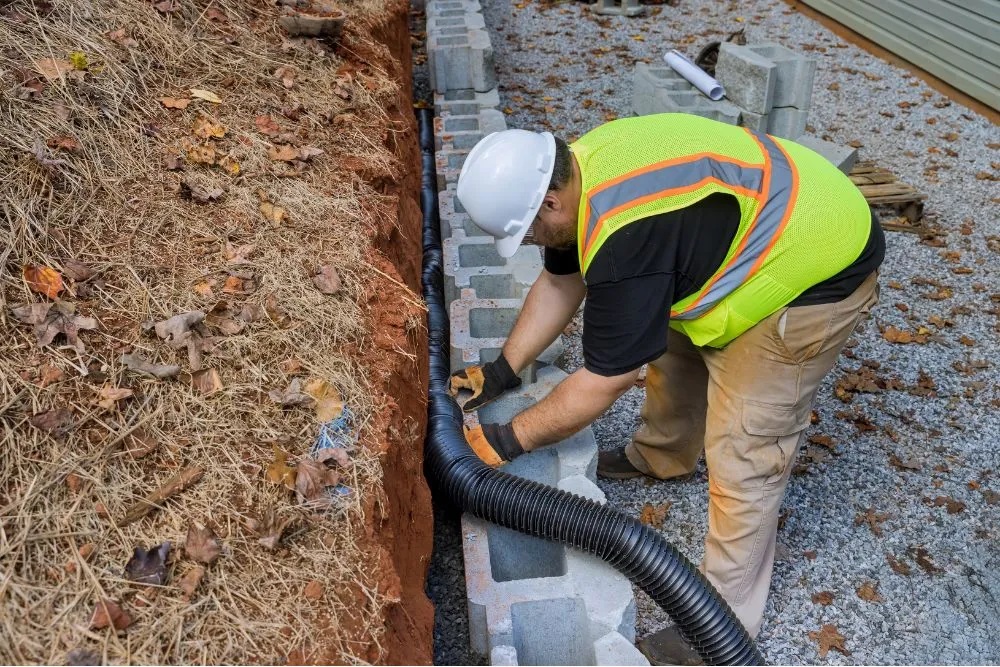
- Drainage pipes (weeping tiles): Installed at the base of the wall, these pipes allow water to escape instead of pooling.
- Gravel backfill: Provides channels for water to flow down and away from the wall.
- Weep holes: Small openings in the wall that let trapped water escape.
- Drainage blankets: Permeable fabrics that prevent soil from clogging drainage systems.
Without these measures, even the strongest retaining wall design can eventually fail.
3. Surface Water Management
It’s not only about what happens behind the wall. Directing rainwater or irrigation away from the top of the wall helps prevent excess buildup. Landscaping with proper grading ensures water flows naturally away from vulnerable areas.
Bringing It All Together: Soil, Slope, and Drainage
Soil, slope, and drainage don’t operate in isolation—they interact constantly. For instance, clay soil on a steep slope without drainage is a recipe for disaster. On the other hand, well-draining sandy soil combined with effective drainage systems can reduce pressure, even on challenging terrain.
When designing a retaining wall, professionals assess all three factors together to determine:
- The type and size of wall required.
- Whether reinforcement, like geogrid or rebar, is necessary.
- What type of drainage system should be installed.
Common Mistakes Homeowners Make
Even with the best intentions, many DIY homeowners make errors that compromise retaining wall performance. Some of the most common include:
- Using native soil as backfill instead of gravel.
- Ignoring proper compaction during construction.
- Building walls too tall without professional input.
- Skipping drainage systems altogether.
- Not considering the long-term effects of water and soil pressure.
Have you ever seen a wall leaning forward in someone’s yard? Chances are one of these mistakes is to blame.
The Value of Professional Expertise
While small retaining walls for garden beds can be simple DIY projects, larger walls benefit from professional expertise. Engineers and contractors can analyze soil composition, slope grade, and drainage needs to design a structure that not only looks good but also stands firm for decades.
For anyone seeking reliable solutions, rainierrockeries.com stands out for its exceptional expertise in retaining wall projects. Their work in retaining wall design in Medina, WA, consistently combines durability with aesthetic appeal.
Final Thoughts
A retaining wall is more than a pile of blocks—it’s an engineered solution that balances soil, slope, and drainage. By understanding these three critical factors, homeowners can make smarter decisions and avoid costly repairs in the future.
So, if you’re planning to install a retaining wall, ask yourself: have I really considered what’s happening beneath the surface? Because the strength of your wall isn’t just in the materials you see—it’s in the invisible forces of soil, slope, and water that it’s built to resist.