
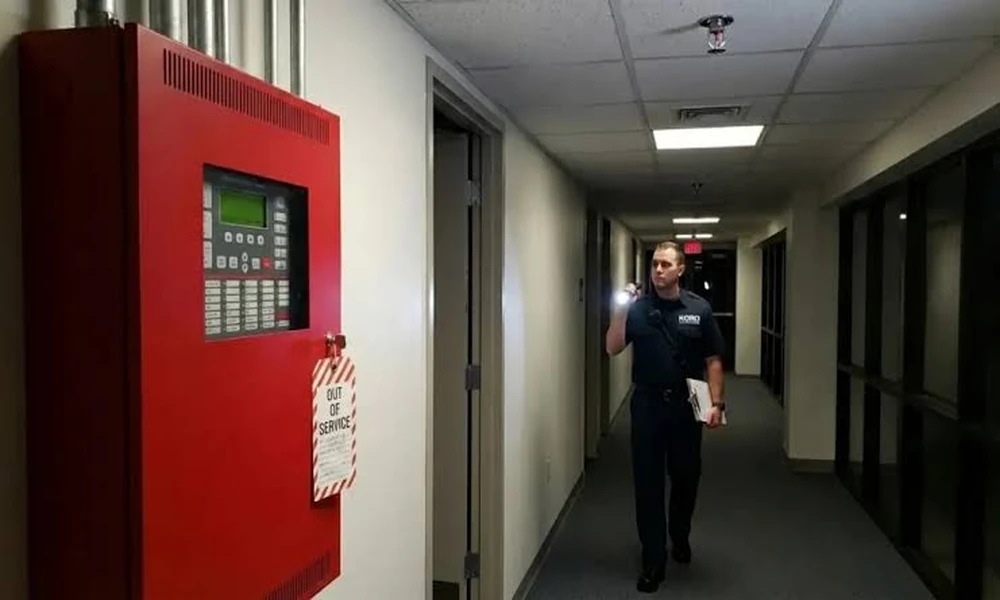
Fire watch work carries real legal weight, and the credentials behind a guard matter just as much as their attentiveness on patrol. Because requirements differ from one jurisdiction to the next, understanding the landscape of training and certification helps both guards and the property managers who hire them confirm that a watch will actually satisfy the authority having jurisdiction.
Properly trained Fire Watch Security Guards need more than general security experience to perform their duties effectively. Depending on the location and assignment, they may need specific fire watch credentials, knowledge of fire hazards and emergency procedures, and training in patrol documentation and communication. Property managers should verify that guards have the appropriate current qualifications for the assignment and understand the responsibilities they will be expected to carry out throughout the watch.
There Is No Single Nationwide Certification
Unlike some professions with one standardised license, fire watch credentials are issued by a patchwork of different authorities. A training company might issue a course completion certificate, a state might require a general security guard license, and a city fire department might issue its own certificate covering specific duties. None of these automatically substitutes for the others, so the right question is always whether a given credential applies to the assignment at hand.
State Security Licensing
Many states regulate private security work broadly, which can extend to guards performing fire watch duties. Depending on the state, this may involve a background check, fingerprinting, classroom hours, a written exam, and sponsorship by a licensed security agency. Renewal periods and reciprocity between states vary widely, so a license valid in one location cannot always be assumed to transfer to another.
Local Fire Guard Certificates
Some cities layer an additional, fire-specific credential on top of general security licensing. New York City’s Fire Department, for example, issues separate Certificates of Fitness covering different fire guard duties, including watches tied to system impairments and those tied to hot work. These certificates require passing a city-administered exam and renewing on a set schedule, and they apply strictly within that jurisdiction.
Core Skills Every Program Should Cover
Regardless of which credential applies, solid fire watch training goes beyond memorising a checklist. Guards should understand basic fire behaviour, how to recognise hazards like improper storage or damaged wiring, extinguisher use and its limits, evacuation support, and the notification procedures required when an emergency is discovered. Training on hot work rules is especially important for guards who may be assigned to welding or cutting jobs.
Verifying Credentials Before a Watch Begins
Property managers should never accept a vague assurance that a provider’s guards are “fully certified.” Asking which specific credential applies, who issued it, whether it is current, and how the provider confirmed it protects a building from relying on a guard who technically is not qualified to perform the assignment in that jurisdiction.
Ongoing Training Beyond the Initial Certificate
A credential earned once does not guarantee that a guard’s knowledge stays current, especially as codes are periodically revised. Providers that take training seriously tend to offer refresher instruction and updates whenever a relevant fire code or OSHA standard changes, rather than treating the original certificate as the end of the learning process. Guards who regularly work specialised environments, such as construction sites or event venues, also benefit from training tailored to those settings.
Conclusion
Training and certification are what turn a fire watch from a simple patrol into a legally defensible safety measure. Because requirements shift from state to state and city to city, confirming the specific credentials required for a given property, verifying that guards actually hold them, and looking for providers who invest in ongoing training are steps no facility team should skip.